In today’s finance and insurance contact centres, the pace of risk is relentless. Vulnerable customers don’t always self-identify, objections aren’t always handled properly, and PCI breaches can happen in seconds.
Traditional QA sampling (manually reviewing a handful of calls after the fact) can’t keep up. Risks slip through, regulatory exposure grows, and customers are left unprotected.
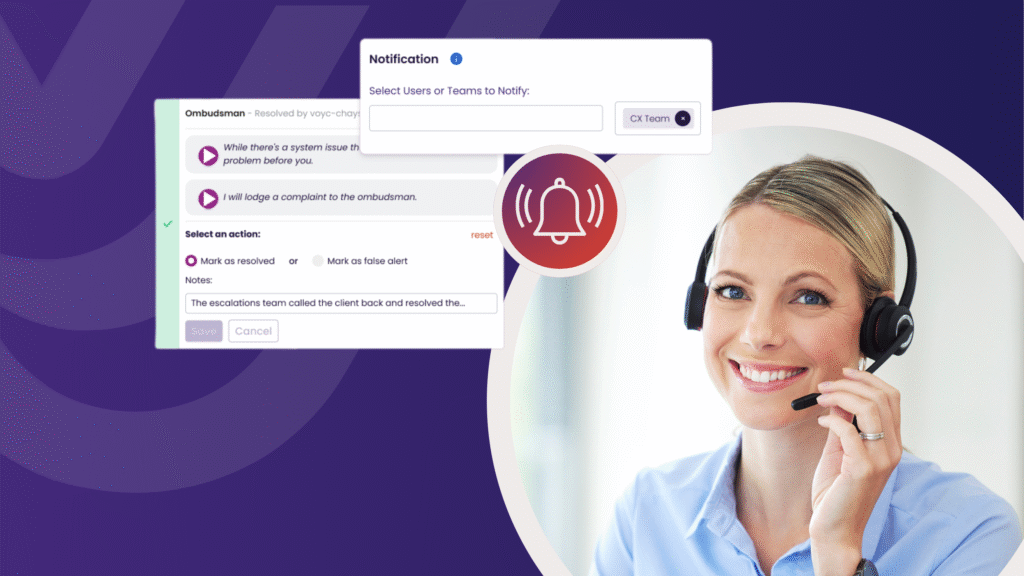
That’s why more firms are turning to near real-time QA alerts: automated notifications that flag high-risk signals during or shortly after a call, giving teams the chance to act before issues escalate.
What are near real-time QA alerts?
Near real-time QA alerts are automated notifications triggered by specific words, phrases, or behaviours in customer calls.
Instead of waiting days or weeks to uncover an issue through random sampling, QA and compliance teams are notified almost immediately when something risky happens.
Why this matters:
Improved compliance → detect vulnerable customers and complaints quickly and easily, ensuring protocols are followed.
Better MI instantly → surface meaningful trends (e.g. objections, product mentions) with more speed and clarity than manual reviews.
Efficient QA at scale → monitor 100% of calls automatically without extra headcount, while identifying risk and coaching opportunities.
Key use cases finance & insurance teams can’t ignore
Here are five types of alerts that directly reduce risk and support better outcomes.
1. Objection Alerts
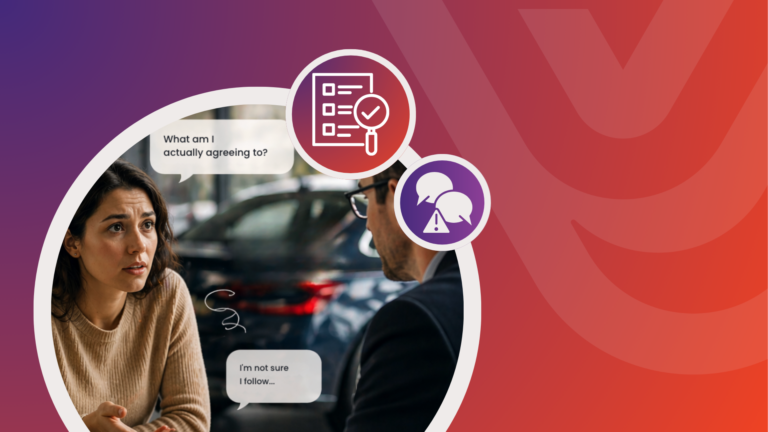
When a customer hesitates or raises an objection, QA teams need to know fast.
Example phrases:
“I’m not sure this is right for me.”
“That sounds expensive — can I think about it?”
“I don’t really understand how this works.”
Why it matters: Objections are a critical mis-selling risk. Under Consumer Duty and FCA sales conduct rules, firms must ensure customers understand products, receive clear information, and are not pressured into unsuitable agreements.
2. Vulnerability Alerts
Customers often reveal subtle but critical vulnerability cues.
Example phrases:
“I’ve just been signed off work for stress.”
“I’m struggling to keep up with my bills.”
“My health hasn’t been good lately.”
Why it matters: The FCA requires firms to identify and support vulnerable customers. Near real-time alerts give QA teams the chance to confirm appropriate signposting and ensure fair treatment in line with Consumer Duty.
Ops perspective: Without alerts, one QA manager shared that vulnerability cues were often spotted too late, sometimes only after a complaint was raised. Real-time alerts prevent these costly oversights.
3. Life Event Alerts
Major life changes can turn a suitable product into an unsuitable one overnight.
Example phrases:
“I was made redundant last month.”
“I’m going through a divorce right now.”
“My partner passed away recently.”
Why it matters: Life events can drastically change affordability or suitability. The FCA expects firms to evidence they are tailoring support and avoiding foreseeable harm. Alerts help teams intervene before a mis-sale occurs.
4. Credit Card Mention Alerts
PCI-sensitive information can slip through easily in everyday conversations.
Example phrases:
“My card number is 4929 1234 5678…”
“The expiry date is 08/26.”
“Here’s my CVV: 738.”
Why it matters: PCI DSS standards require firms to protect payment information. Unsecured capture exposes firms to costly fines and reputational damage. Alerts prevent breaches and demonstrate compliance safeguards.
5. Complaint Alerts
Customer dissatisfaction often appears in early, subtle forms.
Example phrases:
“I want to speak to your manager.”
“This isn’t what I was promised.”
“I’m not happy with this service.”
Why it matters: Under FCA DISP rules, firms must capture and resolve complaints fairly and promptly. Alerts enable early intervention, reduce escalations, and improve complaint MI reporting – a key area of regulatory scrutiny.
Alerts vs. Risks Mitigated
Why alerts are a compliance lifeline
For regulated firms, near real-time alerts aren’t just operationally useful – they’re a compliance lifeline.
Reduce exposure to mis-selling, PCI fines, and complaints
Demonstrate proactive oversight to regulators and partners
Put simply: alerts help firms prove they’re identifying and addressing risk before harm occurs.
Scaling QA without scaling headcount
Many QA leaders feel trapped: risk is growing, but headcount budgets aren’t.
Alerts change that equation.
Monitor 100% of calls without listening to 100% manually
Free up QA staff to focus on root cause analysis, coaching, and improvements
Do more with less while showing regulators robust oversight
Mini case study: After one year of implementing Voyc and our alerts system, Momentum achieved a 22% decrease in the volume of complaints escalated to the Ombudsman.
Quick FAQ: Do alerts replace human QA?
No. Alerts support QA teams, they don’t replace them. Human judgment is still essential for reviewing flagged calls, analysing root causes, and coaching agents. Alerts simply ensure the right calls are surfaced instantly, so QA time is focused where it matters most.
Conclusion
Staying ahead of risk doesn’t mean scaling QA teams endlessly. By introducing near real-time QA alerts, finance and insurance firms can:
Protect vulnerable customers
Reduce regulatory exposure
Improve MI and spot risks faster
Scale oversight efficiently
Demonstrate Consumer Duty and DISP compliance with confidence
Alerts don’t just protect, they also free up QA teams to focus on coaching, performance, and customer experience, supporting both compliance and growth.
Discover how Voyc alerts can help you protect customers, meet FCA expectations, and keep growth on track.